Tuesday, February 12, 2013

Never Go (Book) Marketing Without A List


For a long time the word marketing meant, well, marketing. 

You know:

Milk
Eggs
Peanut Butter
Chocolate Chips
Apples
Cookies
Yogurt
COOKIES

But along comes the time when my life turns that term upside and around and marketing has nothing to do with food or rickety carts or special super sonic discount cards.  Jeez.  I’m so good at grocery shopping! Going to the supermarket. Marketing.  Whatever you want to call it.  I keep a running list through the week of what I need and want. I keep like-items together, sometimes I include recipes. Then, on a full stomach, I go off to the market, list in hand.  And aisle by aisle, I get what I need. Sometimes things I want. Sometimes what I want isn’t there and I either wait or make a substitution.

Hey wait! 

There is no reason that the principles of good food shopping can’t apply to good BOOK marketing. Here's a marketing list to get you started!  

  • Keep a running list. Anytime an author does something you like, or something you don’t like, write it down. Start now so you don't forget anything you need. You know how you can spend $200 in the supermarket and leave without the milk?  Yeah, that. 
  • Figure out what you need, and what you want.  You may want the red velvet cupcakes from the bakery section.  You may want coverage for your book on a snazzy website.  What’s the cost, financially, and to your ultimate goal? If you want to eat healthy, forego the cupcakes. Or buy one. If you are on a tight budget, find a less expensive (or free) way to market your book.  Maybe there’s another site just like it that will offer you the same benefits.  If you need something, figure out a way to get it done. If you want it, decide if it really belongs on the list. Remember, you can always make a new list later. 
  • Search things out.  I don’t know about you but I’m relentless if there is something in a store that I want to find. Things are not always where you think they’ll be, are they?  Go searching through online and in-person marketing opportunities for your book like you were looking for an ingredient for a recipe for your very important person’s birthday. Be relentless.  It won’t come to you. I know this because I've waited. 
  • Ask questions.  Gotta love the produce guy, right? He knows his stuff. He’s done this before and he’s the one who can show you how to pick a ripe cantaloupe.  Ask authors you admire how they found their favorite resources. Follow (stalk) authors and watch what they do. Do that. 
  • Do what you enjoy.  Try new things, but if you like it, you’re more likely to be good at it, follow through, and have your message find the right readers and book buyers.  Book marketing is not one size fits all. Probably the reason I sometimes am tweaking dinner for different family members.
  • Be polite. Others’ time and personal space matters in book marketing. A lot. It’s probably a good idea keep a fair distance in the other market too, so as not to bang your grocery cart into the back of anyone’s ankles. 

Amy Sue Nathan is the author of THE GLASS WIVES, forthcoming from St. Martin's Griffin, May 14, 2013.  She hosts the popular blog, Women's Fiction Writers, and tweets about writing, publishing and chocolate @AmySueNathan. 

Sunday, February 10, 2013

Getting Stuck with a Sagging Middle – by Wendy Nelson Tokunaga


In the novel writing workshop I’m teaching this quarter, we’ve been focusing on the middle of novels. This is the place where a lot of writers get stuck. It’s pretty straightforward why we write the opening and climax of a novel, but the middle? How are we supposed to fill such a huge void?

I’m using a terrific book as the text for this course: Beginnings, Middles & Ends by Nancy Kress, which is great for novelists (and short story writers, too) at all levels. Even the most experienced writers can get stuck in the middle of their novel-in-progress (Yes, says this author, raising her hand), and reading or re-reading a practical craft book can often work as a nice reminder and give a needed kick in the butt.

Kress points out that there are several common reasons for getting stuck in the middle. Here are some examples:

Fear of Failing: This happens when a writer compares herself too much to other writers. Novels become half-finished and the writer runs out of steam because she’ll never be as good as _________ (fill in the blank). I remember being in a short story writing class years ago when a fellow student announced to me that she had just read Ethan Canin’s short story collection. “That’s it,” she said. “I give up. I’ll never write as well as him.” I’ve found it’s much better to try and be inspired by another writer rather than intimidated. Otherwise this can become a recipe for paralysis.

Fear of Being Successful: This also can result in the writer not finishing her novel and stopping in the middle. The line of thinking goes something like, “What happens if I finish this book? Then I’ll have to start another one and I don’t have any good ideas. And then I won’t be a real writer anymore and I’ll lose my identity. . .etc., etc.” So the writer keeps polishing and revising and can safely say that she’s working on the book, but becomes bogged down with “The Curse of the Novel that Wouldn’t End.”

Fear of Not Knowing What Happens Next: Bingo! This is the one I’m grappling with right now in my novel-in-progress. Kress calls this “literary fogginess,” which is often the result of not having worked out the complete plot of the story beforehand (or perhaps realizing the original plot won’t quite work) and hoping to discover what happens from simply diving in and writing.

I’ve taken Kress’ advice and started writing extensive notes as to what my characters want and whether there are things I’ve overlooked. I’m also working on other directions for them to take (even wild ones) that will hopefully excite me so I can get back on track. I’m making progress and am convinced that I will turn my stuck, sagging middle into something tight and taut, provided I do enough sit-ups!

How about you? What do you do if you’re stuck in the middle of your novel or story? Any craft books you recommend that can help come to the rescue?

Wendy Nelson Tokunaga is the author of the novels, "Midori by Moonlight" and "Love in Translation" (both published by St. Martin's Press), and the e-book novels, "Falling Uphill" and "His Wife and Daughters," and e-book short story, “The Girl in the Tapestry.” She's also the author of the nonfiction e-book, "Marriage in Translation: Foreign Wife, Japanese Husband." Her short story "Love Right on the Yesterday" appears in the anthology "Tomo," published by Stone Bridge Press, and her essay "Burning Up" is included in "Madonna and Me: Women Writers on the Queen of Pop." Wendy holds an MFA in Creative Writing from University of San Francisco and teaches for Stanford University's Online Writer's Studio Novel Certificate Program. She also does private manuscript consulting for novels and memoirs. Follow her on Twitter at @Wendy_Tokunaga, friend her on Facebook and visit her website at: www.WendyTokunaga.com

Thursday, February 7, 2013

Marketing omgodpleaseno

You know what I think the single best thing an author can do to market her books?

Write a damn good book.

Don't save anything for the next book, don't hold back, don't be polite. Put it all out there on the page and let it speak for you and to your readers.


Then, well, you do what you can to let people know about your book. Most of us don't have the resources to make our books a hit. What do publishers do for their big authors? They give away thousands of books (See: Amanda Hocking's story about her traditional publishing experience.) They get articles in major news outlets. They tell book wholesalers the print run is 200,000 and that they want front-of-every-single-store placement.

Julia Quinn, I'm told, when mostly unknown, hand-made ARCs and sent them to bookstores and readers everywhere. This worked.

You know why?

Because her books were delightful.

You could do the exact same thing, and if your book is not delightful, or gripping, or what have you, it's a waste of time and money.

Start with a damn good book.


5 Must Haves in Book Marketing

by Malena Lott

So this post is where my two worlds meet. I'm an author marketer. A marketing author. When I'm not writing fiction, I'm creating branded content for clients - everything from brand strategy like taglines and positioning to digital ads, web copy and traditional advertising campaigns. You can learn more about my company Athena Institute here. In 2011, I added publishing into the fold with the imprint Buzz Books USA. We've published 16 titles with 7 more coming this year, which means a whole lot of branding going on because each title or series needs a marketing plan.

Must haves?


  1. 4 Ws and 1 H. If you don't know who you are, what you're doing, why you're doing it, where you're going to promote yourself and how you're going to get it done, you'll feel lost. A marketing plan can be as simple as that. Work it out and stay the course. 
  2. Do something daily to promote yourself. It could be a guest blog or it could be simply having an ongoing campaign running to keep your name in front of your audience, but you do have to have action to make traction.
  3. Invest in your brand. This means both time and money. It can be as little as a dollar a day spent reaching new folks on Facebook or a pay per click campaign. If you have enough money to try "lump sum" advertising, go for it and see what results. If you're confident about your 4 W and 1H, then you'll feel better about advertising.
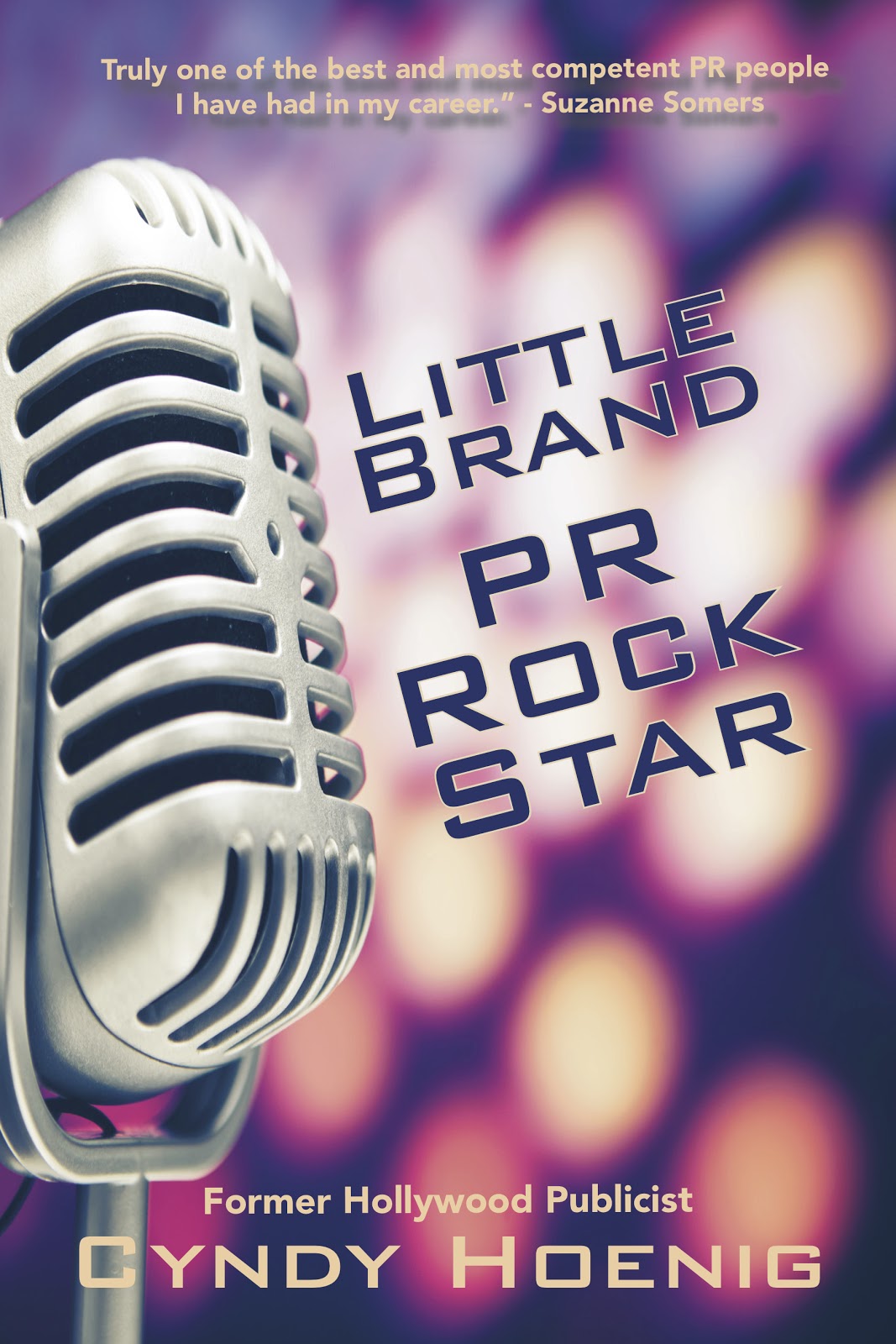
  4. Put yourself out there. Including in the real world. Digital is great and online will always be here, but it's actually noisier on here than it is in the traditional space. Reach is wonderful online, but effectiveness and return on investment can come a lot quicker with a speaking opportunity. I'm speaking to a group of young business leaders next Tuesday and I got my new business cards in. Or are they bookmarks? They are business card bookmarks. All business on the front and party on the back. And by "party," I mean my book covers. I'll offer those 60 attendees a card and if they email me, I'll give them an early review copy of my first branding book, The Little Brand That Could coming out in late spring. I'll also co-promote one of my author's books, PR Rock Star, which is the first Little Brand book. Always give them something in return for their time.
  5. Persistence and patience. Don't give up. I tell my clients and my authors, just when you're getting tired of your campaign, everyone else is just starting to notice it. Marketing should be ongoing and good brands should never die. You have to keep breathing new life into them and also work on reach and frequency. If you are talking to a lot of people but don't have repetition, you're message will be forgotten. If you talk to too few people, but hit them with frequency, you'll get results but only by those few. It takes both. 

If you're a marketer, small business owner or an author, and would like to read an early copy of either PR Rock Star or The Little Brand That Could, leave a comment below and let me know which title you'd like and your email address. If you have a marketing question, hit me up. I'll answer. 

If you're on Facebook, I'm doing a year-long True-Do campaign on my Facebook author page with tips on living our true purpose with as much peace, prosperity and joy as we can muster. I'm also giving away weekly prizes. 

Tuesday, February 5, 2013

The World’s Best Book Marketing Tips


Okay, you knew you weren’t getting them, right? Because the number one tip is that there is NO magic equation, blog tour or secret sauce that holds the key to successful marketing. You just have to work hard. And that shouldn’t be a problem. If you have completed a novel, you are no stranger to hard work. But some times even with hard work the stars just don’t align. But today we’re thinking positive and that is the reason for “world’s best”.

There is something in that whole idea of “world’s best” that--though overused by pizza joints and coffee shops all over the Big Apple -- I respect. Sometimes you have to promote yourself and to do that you need to believe that what you have is what everyone wants. This is not easy to do. My day job is in television promotion and marketing and I have no problem promoting television channels, shows and events. When it comes to my own books, it doesn’t come as easy. But this is what I found works. Now I just have to close my eyes and force myself to do it.

Know your audience. Who are the people that want this book? Figure out your target and go for it. Where do those people hang out? Maybe you start going to there. What blog do they read? Maybe you pitch said blog an article about something relevant that can circle back to your book. Find an in.

Tell EVERYONE about your book. Really, what else do you have to say? No one wants to hear about the weather, your awesome vacation or how well your kids do or don’t do in school. You think you’ve found your audience (see above), but maybe your bus driver has a kid who would love your YA book. Who says your dry cleaner doesn’t read romance? Doesn’t everyone and their mother like a good mystery? They do. They also like finding out they know an author. When I found my dental hygenist was a new mom (and the perfect audience for my novel Momfriends), I told her all about  my book the second she took that suction thingy out. I made a sale and it bought me some time between scrapings.

Postcards I’ve posted about this before. They’re magical. They’re cheap. They’re lo-fi. They work.

Get a support group. Find a pal you can bounce things off of and find a group (like the girlfriends) who can help you figure things out and spread your good words.

Be authentic in social media. I think just about every girlfriend in this group would agree NO ONE wants constant “buy my book” messages. There is something so impersonal about social media, that you have to strive to share as much truth as you can. 

Finally listen to my 6th grade English teacher. Terse concise and succinct was her writing advice. And I’m not telling you how to write your novel. You need one sentence or something catchy that can translate your book fast when people want to know what it’s about. Easier said than done, but you can do it. Why? Because you’re the world’s best terse, concise, succinct sentence writer.

Godspeed.

Ariella Papa is the author of Momfriends and other novels. Like her on facebook. Please. 

What I "No" About Marketing


by Christa Allan

Here’s what I wish I would have known about marketing my novels: If you wait until the first one is released, you’re too late. In fact, if you wait until six months before it’s released, you’re dangerously close to too late.

In my delight, disbelief, deliriousness of my agent calling to announce that my first novel had been sold, I didn’t think to ask about marketing. To give myself somewhat of a break, I didn’t know what I didn’t know. That is—marketing is to a novel what parenting is to a baby. It’s just not enough to give birth; you have to commit to pre-natal and post-natal care and post-post natal and post-post-post…You get the analogy.

Girlfriends’ posts about marketing prior to mine have provided a wealth of information. If you haven’t read them, I encourage you to scroll through the previous days’ posts. 

My fourth book is about to be released, and I’m still discovering all that I’ve done or not done, right and wrong. Perhaps my experiences can help.

1.     No Whining: I think this was mentioned in Judith Arnold’s post, but there’s no glory or progress made in whining because we, as authors, are expected by publishing houses to assume greater responsibility for marketing our own books. Perhaps Stephen King, John Grisham, Nora Roberts and etc. get a bye on this one…when I/you are there, we’ll know.

2.     No Spending Money You Don’t Have: Set a budget, maybe some or all of your advance, or other money just hanging out waiting to be spent. Promoting dollars disappear as quickly as peanut M&Ms do when I’m on deadline.  Bookmarks, postcards, flyers, brochures and other print materials can be pricey. But, this also isn’t the place to go for the lowest bidder either. Tacky, amateur graphics can be worse than none at all.  Find out what your publisher will and won’t supply. And there’s the cost of maintaining a website, attending a conference, hiring a publicist, print ads, blog ads, blog promotions, and the beat goes on. And it’s overwhelming. Talk to your agent, in-house publicist, and/or writer friends for ideas for spreading your wealth.

3.    No Social Network Pimping or Stalking: Marketing means making your presence known. But here’s the deal. . .don’t use Facebook, Twitter, Goodreads, LinkedIn or other social media as advertising for your novel. Especially if the first time you’ve been on the sites is the week your book released.  It’s like trying to be friends with a lottery winner the day s/he cashed in the ticket.  You wouldn’t nudge your friends about buying your book every time you see them, and social media is just that…a time to be social. Build relationships.

4.    No Guts, No Glory: Reach out to local bookstores, libraries, schools and offer workshops. Find “real world” connections to your fiction and join their organizations, read their websites, perhaps offer a few free copies. I mailed copies of my first novel, Walking on Broken Glass, which dealt with alcoholism and recovery to local and even out-of-state treatment centers, especially those for women. Prior to even finishing my second novel, The Edge of Grace, about a Christian woman whose brother announces he’s gay, I joined the online Gay Christian Network. My publisher sent copies to the local Parents and Friends of Lesbians and Gays. They not only endorsed my book, they invited me to speak to their group. My upcoming novel, Threads of Hope, has characters meeting because of the AIDS Memorial quilt. I included a section at the end of the book with instructions on how to make a panel to send to the NAMES Project. So, even though it's fiction, a novel can still cross-over to find ties that can help in marketing. 

5.    No Gorging: Sometimes we venture so far into the marketing cave, we forget there’s a laptop waiting for us at the entrance. Marketing, for me, is often more time-consuming, more exhausting, and more discombobulating than writing. If I’m not careful, I can spend too much time talking about my writing than writing. Set aside an hour a day or whatever works for you without gobbling up your writing time. I’m retired now (entering week three and oh, how glorious it is!), but when I taught, I used Saturday or Sunday to plunge in to the muck of marketing.

I hope some of these ideas are helpful. (If they aren’t, just don’t tell me). Remember, though, above all….you are a writer. And if there's no writing, there's no need to market!

Christa Allan is the author of  the soon-to-be released Threads of Hope. Her other novels are Walking on Broken Glass, The Edge of Grace, and Love Finds You in New Orleans. You can find her at www.christaallan.com, Facebook, and Twitter. When she's not marketing and/or frantically meeting deadlines, she's weeding her garden in hopes of generating ideas. Christa, a very recently retired teacher, and her husband live in New Orleans in a house older than their combined ages. Their three neurotic cats are adjusting.


Monday, February 4, 2013

Shhhh! I Don't Really Know What I'm Doing!

It's true.  When it comes to marketing, I have no idea.  In fact, people a LOT smarter than me (and believe me, there are many) have trouble with marketing - a point that never ceases to frustrate me.

There is no magic wand, dammit!  I hoped there was - but there isn't.  And with today's technology, social networks, etc. - it changes every day - kind of like the staircases at Hogwarts.

At the end of December, I left the day job to write full-time.  Since then, I've written 9 pages.  That's right, one chapter.  Why?  Because I've spent all my time on MARKETING.  I've taken webinars on Twitter and Facebook.  I've worked on Goodreads, banners, book covers and networked with hundreds of writers.  I put my box set on sale for $1.99 - which worked at first, but the sales have plateaued at the 3000 rankings. 


So, I've looked into paid ads, and will be experimenting with those later this month.  The sale has been mentioned on websites that cater to more than one million e-readers - with little impact.  It's all hit or miss, I think.  I have friends who've hit the lists with this tactic - without spending a dime on ads.  Others have bought all the ads they can and sell very little.

The reason I'm doing this - and I'm so grateful that I'm able to experiment with price - is to reach new readers.  My books are starting to gain a foothold in the UK and Australia (can you say FABULOUS BOOK TOUR?) - which I think is a good market for me because I write humor.  I'd never do well in France - I'm not Jerry Lewis-y enough.

The other goal I'm trying to accomplish is to break into the Kobo and Nook markets more.  I do okay with Apple and Amazon has been phenomenal.  But people have different e-readers or tablets, so I want to hit those markets too.

I'm giving myself till the end of February before raising the price back up to $9.99 - a price where it did well - just not spectacularly well.  I'll let you know how it goes.

It's a great, strange, confusing and wonderful time to be an author.  I'm embracing it wholeheartedly. 

I just wish I had more time to write.  Sigh.

Leslie Langtry