Tuesday, April 8, 2014

IT'S JUST COMMUNICATION


Judith Arnold


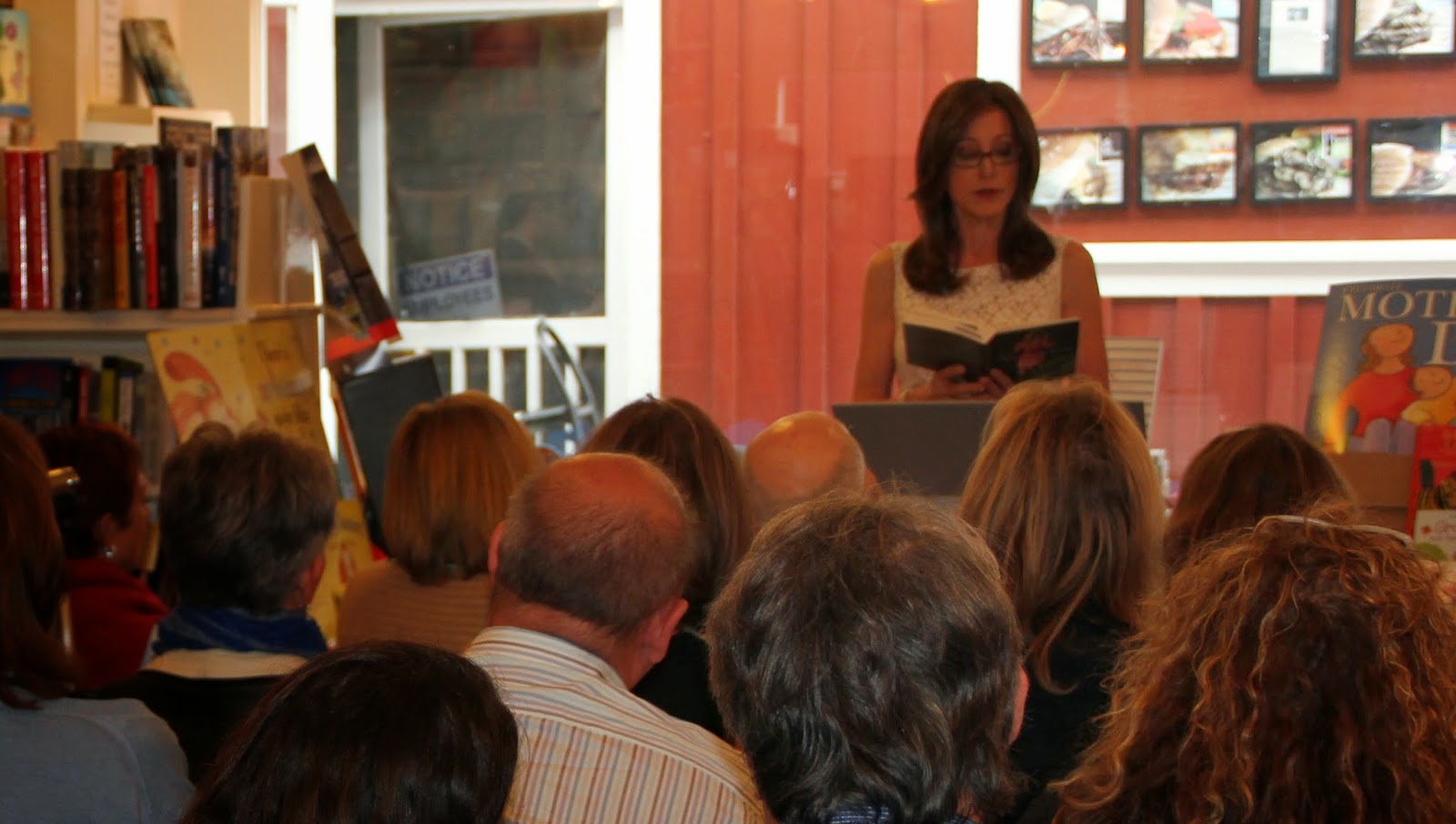
Giving a speech is no more frightening to me than writing a novel. You will note that I didn’t say public speaking wasn’t frightening. It is. But so is writing. In both cases, the fear is the same: does anyone really care about what I have to say?

I write to communicate. I believe I’ve got ideas worth sharing with others. I believe, despite my fears, that what I have to say will mean something to my audience. I believe my books can make readers laugh, cry, think, and feel. I believe my speeches can make a live audience laugh, cry, think and feel, too. More often than not, I make my audiences laugh, but I’ve been told, on occasion, that a speech I’ve given has left audience members shedding a few tears.

Of course, public speaking isn’t the same thing as writing. The experiences differ in three important ways:

  1. When I’m giving a speech, I dress a hell of a lot better than when I’m writing. I can’t recall ever putting on lipstick before I sat down to write. For public speeches, I’ll poke around my meager supply of cosmetics and attempt to pretty myself up.
     
  2. When I’m speaking in public, I don’t have the opportunity to go back and fix what I’ve said once I’ve uttered it. If I’m writing, I can fuss and revise and polish each sentence before I move on to the next sentence. With a speech, once a statement has left my mouth, it’s out there forever. Because of this, I usually type up my entire speech ahead of time. No index cards and single-word cues for me. I write out the whole thing and do all the fussing and revising and polishing in that draft. When I actually give the speech, I don’t read it. I often don’t even look much at what I’ve written. But I have the draft in front of me, with all its fussed-over, revised and polished sentences printed out. Just knowing I took care with those sentences at some point gives me the courage to keep going. 
     
  3. With a speech, I get instant feedback. If I say something funny and everyone laughs, I know I’ve succeeded. With a book, there’s no instant feedback. I’ll write a passage that strikes me as funny, and then cross my fingers and hope the passage will amuse my readers. But I won’t know for sure until my editor phones and says, “That line about the casseroles was hilarious,” or until I get some reviews, which might be a year after I actually wrote the line about the casseroles.

Despite these differences, public speaking and novel writing are pretty similar in my mind. Both require a leap of faith. Both require confidence that I have ideas worth expressing. Both make me feel vulnerable. Both are kind of scary. But if things go well, if the world agrees with me that my ideas are indeed worth expressing, both make me feel exhilarated.


However, I’m not going to wear lipstick when I write. Only when I speak.


Judith Arnold has a busy public speaking schedule this year. She recently presented workshops to writers’ groups in New Hampshire and Maine, and will be leading a discussion at the NECRWA conference in Massachusetts in May and speaking at the Romance Writers of America national conference in July. She’s been putting her lipstick collection to good use.

In the meantime, the Kindle edition of her new mystery release, Dead Ball, is priced at only $1.99 for a limited time, as part of a special promotion at Amazon. Grab a copy while it’s discounted! You can visit her web site  to learn about her independently published romances. For more information about her upcoming titles, discounts and deals, please sign up for her newsletter.

Talk About It by Jenny Gardiner

Sheesh! When I started writing novels, it was because I just kept reading books and thinking "I could do that!" After all, I was already a writer; my overwrought Christmas newsletters no doubt kept recipients on the edge of their seats each December (make that February, as I was always late with them). And my grocery lists, well, let's just say I compose a mean grocery list.


In truth, I have long been a little too fascinated with the stories of peoples' lives -- be they the sordid tales of famous people, the unfathomable actions of "what-the-hell-were-they-thinking" criminals, or the simple stories of average peoples' lives (I am so addicted to reading obituaries), I guess I'd stockpiled enough information that I was ready to make up my own characters with their own issues. Throw in a slight obsession with what motivates people, and I guess I needed to become a novelist, or a psychologist.


However, I hadn't bargained for the whole other side of writing a book, which is promoting the thing. This aspect of publishing has eclipsed the mere writing of a book over the past few years, with the growth of the internet and the vast and boundless world of social networking. Sadly, in many ways, promotion efforts by necessity dwarf writing duties. I suspect most writers would far prefer to just get to work on another book, rather than jumping through the many, many hoops of fire in order to sell the previous one. By the time I've finished writing a book, I'm sort of finished with it: I lose perspective on the story and couldn't begin to tell you if it's good, bad or indifferent. Plus I then promptly forget the names of my characters and much of the storyline. I've loved them and left them behind.


But like it or not, promotion happens. And one of the aspects of promotion with which I have a love/hate relationship is public speaking. I hate it because invariably I become slightly terrified. I suppose this is natural -- think Jan Brady having to imagine her audience at a debate in their underwear so she didn't freeze in fear. I worry that I won't say the right things, entertain my audience, and provide them with their money's worth (not that anyone is actually paying for the performance!) all while sporting a fat piece of parsley on my teeth the entire time. I guess it's not fear of public speaking so much as fear of making a fool of yourself in public. And then having it end up on Youtube.


But the reality is, I end up loving speaking to groups. Whether they're book clubs, or at conferences, or civic organizations, book festivals, writing workshops. I am comfortable with my subject matter, which I suppose would mean the contents of my vivid imagination. I could go on for hours about the weird stuff I can fantasize about if given the chance. And if I can fantasize about it, I can write about it. And I've been around long enough to know about the vagaries of the publishing industry.


I think that's the thing: by the time a writer ends up in the position of having to speak publicly, usually said writer has been through the wringer, has suffered the slings and arrows of defeat in this business, and has experienced the great good fortune and joy of being published, which in itself is almost akin to winning the lottery. I enjoy sharing my experiences with the many people who might harbor a secret desire to write and publish a book some day. And I'm thrilled to find people who have enjoyed my writing enough to put on an outfit, hop in the car, and make it to that venue where I'm speaking. It doesn't get more awesome than that. Well, maybe even more awesome when I can elicit laughter. There is something magical about being able to entertain your audience enough that you've made them forget bad things even for a second, long enough to laugh. It's a great feeling.

Ultimately I view public speaking as a real privilege, something that came about as a result of many years of toil to get to where I am professionally, to hone my craft, to learn the business, and to do any and everything required of the world to get me to where I am as a published author. It wasn't easy, but it was so worth it, every step of the way, every mistake, every misfortune that might have befallen me even, because it seasoned me enough to be able to share my experiences and my world with others.


And if I've been able to help even one writer on the path, to pay it forward by easing their way, it's all the more sweet an accomplishment.


  Sleeping with Ward Cleaver


Slim to None


Anywhere But Here


Winging It: A Memoir of Caring for a Vengeful Parrot Who's Determined to Kill Me


Accidentally on Purpose (written as Erin Delany)


Compromising Positions (written as Erin Delany)


I'm Not the Biggest Bitch in this Relationship (I'm a contributor)


And these shorts:
Idol Worship: A Lost Week with the Weirdos and Wannabes at American Idol Auditions


The Gall of It All: And None of the Three F's Rhymes with Duck


Naked Man On Main Street
find me on Facebook: fan page
 find me on twitter here
 find me on my website

Monday, April 7, 2014

Writer Chats: Hits and Misses by Jess Riley

Public speaking is something most of us have an innate anxiety about. But if you've been doing the writing gig for a while, you will probably be asked at some point to speak to a large or small audience about your experiences. And at that point, you need to make friends with your "public speaking" self, which is a side of your personality you may avoided. (We'll never know why, but it tends to hang out somewhere behind the spleen, which isn't very good at parties either.)

Still practicing what to do with my hands during photos.
The month I sold my first book, I attended a reading by Jennifer Weiner. I remember her talk being candid and charming and breezy, but what really impressed me was how FUNNY she was. She had us laughing, engaged, and panicking. Okay, I was the only one in the crowd who was having a panic attack, because I thought to myself, Oh dead God, she's hysterical! She's in my genre! Do I have to be this funny when I talk to people in the future? I can't be this funny!

Over the last six years, I've spoken to 60+ book clubs and given dozens of library talks and readings, and each semester I speak to a captive audience of eighteen and nineteen-year-old freshmen enrolled in my father's English Composition class at UW-Oshkosh. Regardless of audience, I'm always a little nervous before I walk in the room. It used to be worse, but practice and time have wore down the sweaty palms and racing heartbeat.

I always reserve a front-row seat for my invisible friend Becky.
My favorite groups to speak to are the book clubs, because usually everyone is drinking wine, which makes me seem much funnier in person. Most club members are relaxed & open and ask engaging, thoughtful questions.

Library groups can be hit or miss; if you're not a marquee author, you never know if two or sixty people will show up. Half of them will be aspiring authors wanting to know how you broke in, and half will be there because they got lost on their way to the blood drive. I'm totally joking, of course. (My last library talk was awesome, and I was so grateful to all the folks who braved the cold to come see me.)

Anyway, and here are some tips I've found most helpful:

Scarves! Glorious winter scarves. And a cat.
1) Practice: If you're brand-spanking-new at this, practice. In the mirror, to your dog, to your spouse. Have something of a rough draft in mind before you begin. I used to need notecards (yes, I was that terrified I'd forget *something important,* which is crazy-lady-think). Now I pretty much wing it, based on the audience. (Note: this has not always been a good strategy.) Think of what YOU like to hear when you listen to other authors speak, and be inspired.

2) Pre-questions: If you're meeting with a book club, send them a question guide before you get together. If your publisher has a list of questions, great! If not, make your own. For ideas, check out a few sample reading guides / "Questions for Book Clubs" from other books like yours.

If you're meeting with a group of students, ask their teacher/professor to solicit questions from the students in advance, to be passed on to you before your appearance. I've learned from experience that most college freshmen,* for example, WILL NOT be brave enough to ask you anything when you pause for Q & A. But having them submit questions in advance has led to some very thoughtful, entertaining discussions.

I'm lucky enough that I also get to read the response papers students in my dad's class write after my visit. This has also helped me become a better guest speaker.

(*Second graders, however, will ask you a question every twenty seconds, so they're good to go.)

3) Give away a book or bag-o-swag. This is another fun way to engage your audience.

4) Choose your reading material wisely: If you're doing a reading, keep it brief and entertaining. Hook the crowd and convince them they need to buy your book to hear the whole thing. Also (most importantly), consider your audience when selecting reading material. This has been something of a stumbling point for me in the past.

What did I miss? Check out this fantastic recent Writer Unboxed post for more tips, and please comment here with some of your own!

~~~
Jess Riley is the author of Driving Sideways, All the Lonely People, and Mandatory Release. Check her out on Facebook, Twitter, or her badly-neglected blog.


Friday, April 4, 2014

Speak from the Heart and Words Will Never Fail


by Saralee Rosenberg

Not every writer enjoys public speaking but I live for opportunities to be in front of an audience. Maybe it’s because as a wife and mother I look forward to talking to anyone who will listen.

It is oh so different, however, when the woman behind the podium is neither a wife and mother, but a daughter. A daughter who must eulogize a parent. In my case, two parents within the past fifteen months.

With all of my writing and public speaking experience, nothing prepared me for the time I would have to condense a lifetime of love into a short memorial and then present it with grace. The operative word was compose. I had to compose my thoughts. Compose my words. Compose myself.

My father, Harold Hymen, passed in November, 2012 at the age of 86. Miraculously the right words came easy as my dad was like a compelling, memorable character in a novel. He was full of wit and wisdom and so certain of his principles. He had many passions, but none more than his beloved family.

At the end, when the dementia was an unwelcome and unwavering guest, he struggled to get out a new edition of the Hymen Herald, the newsletter he created to communicate with his eight grandchildren. Mind you the email was never about him or my mother. It only featured news about “the kinder” (the grandchildren) so that they would know what was happening in each others lives and remember to stay in touch. 

His was an easy story to tell.

Then a few weeks ago I got the call I had been dreading. My 91-year-old mother, Doris Hymen, had died. She was ill and frail with a checklist of ailments that had morphed from short stories into whole chapters. And yet her mind remained sharp. Sharp enough to demand better coffee at her assisted living center and to bark at an aide who failed to keep her TV tuned to a tennis match... We often joked that the only reason that she lived so long was because God was afraid of her.

But her death wasn’t just the end of a life, it was the end of an era.

For nearly sixty years I was blessed to have had two healthy, independent parents who could never be reached because they were never home. Parents who were avid tennis players and fitness enthusiasts, leaders in their community, active in Synagogue life and always the first in line for the early-bird special at Outback.With a coupon.

How would I be able to write this eulogy? Condense my mother’s essence into a few short pages? Make this most public address and not fall apart?

The morning of the funeral I was still at a loss for words, but reminded myself I knew a thing or two about overcoming writer’s block. First strategy was to send those twin demons, doubt and fear, packing. The only thing that mattered was speaking from the heart. I also reminded myself that as with any challenge, there was always more than one option. When nothing was going right, go left.

 
I did write a loving tribute to my mother and delivered it with the poise she would have expected. She was never one to bow to fear and she taught me well. But there was another lesson. A poignant lesson. One that my father taught me and which I'll never forget.

Do for your parents so that one day your children will know to do for you.

Rest in peace, Mom and Dad. The legacy you left, three children, eight grandchildren and five great-grandchildren means that your loving hearts will live on in all of us. 

Teach your children well, indeed.

Saralee Rosenberg is the author of A LITTLE HELP FROM ABOVE, CLAIRE VOYANT, FATE AND MS. FORTUNE and DEAR NEIGHBOR, DROP DEAD. Her work-in-progress, THE MIDDLE SCHOOL MEDIUM is her first novel for younger readers. Visit her website. www.saraleerosenberg.com

Thursday, April 3, 2014

Public Speaking for Writers (or: How to Talk to People Who Aren’t in Your Head)


 Most writers are introverts, spending our days talking to people in our heads. Even when promote our work on Facebook and Twitter, we can hide behind the screen. But the time will come when someone asks you to get up and, that’s right, talk to REAL People. Here’s my advice: Just say YES!

There is nothing more fun than talking about something you love to do – to people who are interested, Where else will you meet people who truly like to read or who want to write. These are your people!

Start with baby steps. My first speaking gig was at my daughter’s kindergarten class, where I taught the basic three act structure. Jack and Jill went up the hill, Jack fell down and broke his crown, they both came tumbling after. Sounds simple until one kid - probably like you at that age - wonders what the heck happened on that hill to make Jack break his crown. No worries.  You can save the advanced story structure lecture for first graders.

I began teaching at the UCLA Writers Program soon after my first novel was published 15 years ago. The classes are filled with all kinds of professionals, so I spent weeks organizing my notes and creating class outlines, timing the contents and planning exercises to keep them engaged. The first quarter, I spoke too fast out of nervousness. The second quarter, an older gentleman fell asleep during every class. But eventually, through practice, I got the hang of it. It felt like having my own stand-up comedy act, where I had a captive audience and everyone laughed at my jokes. I still use much of same material, always updating for new examples and customizing lectures for different audiences. The best part is that by teaching about writing, I always have new thoughts about my own.           

Later, I began speaking at conferences and seminars. Not only is this a great way to get away from your desk, but it’s an ideal way to present your latest book after the launch is over. Last week, at a charity event, I spoke to 300 people about What A Mother Knows. This was by far my biggest audience so, naturally, I was nervous. My goal was to sell books, to donate funds to the charity, to make the sponsor glad she invited me, and also, I wanted to have fun.
Before me was a comedian who made a joke about the bazaar on the side of the ballroom – accidentally insulting the audience. Then a young author with a bestseller talked about himself the whole time and forgot to describe his book. Finally, it was my turn. Sure enough, my mouth went dry as I was called up to the podium. But as soon as I put my notes down and looked at all the faces of people who were truly interested in what I had to say, the rest came easily. And the line of people waiting for me to sign their books reflected that. It was my best day yet. The key? It sounds old fashioned, but it works: Be prepared.

1.     Do your homework. Even for a short talk, it helps to make notes about what you might want to say. Then write a rough draft. I usually break it down to an outline, then put it in bullet points. Then copy these onto a notecard. Now you’ve reviewed the material a few times so all you have to do is….
2.     Practice! Things sound different out loud than they do in your head. Stand up and pretend the audience is there. Time it. And do it again. This is the boring part, but it’s the part that makes ALL the difference between panic and poise.
3.     Plan your outfit ahead and decide on every accessory. Make sure it’s all cleaned and ironed so you don’t rush on that day.
4.     Pack your notes the night before. Add Kleenex, dental floss, blotting powder, lipstick, and business cards.
5.     Arrive early – check out the room, use the bathroom, and thank the folks who invited you.
6.     Collect yourself. Breath deeply. Review your notes before you are called.
7.     Adapt – Be familiar with your audience. Think of a comment you can open with that points out your similarities. Listen to the speaker before you, to see what the audience responds to and how you can improve on that.
8.     Avoid temptation.  Do not drink alcohol, or too much coffee, or water. Turn off your phone.
9.     Smile …. and have fun.
10.  Write a thank-you note.
 
 
You may never be relaxed before a speaking engagement, but following these tips will help you be successful. Then, you can run back to your desk and talk to those wonderful people inside your head.
___________________________________


Leslie Lehr is the prize-winning author of six books, including the novel, What A Mother Knows.  She also works as the Novel Consultant for Truby's Writer Studio.  

Contact Leslie at www.leslielehr.com   www.Facebook/authorleslielehr   TW @leslielehr1