Friday, November 11, 2011

Why I write mysteries and thrillers

By April Henry


I may lose all my street cred when I tell you this, but I started writing mysteries and thrillers purely by accident.  

My initial goal was to write the great American novel. Or at least literary fiction.

So I wrote a book called Empty Spaces about a woman who works in the admitting department of a hospital and who falls in love with a long-term rehab patient, despite the fact that she's married and he's in a wheelchair.  

I couldn't get even an agent interested in that book, although, years later, I still have a depressing file of rejections.

Then I wrote a book about a woman who comes home because her mother is dying and ends up dealing with how she was raised in a religious cult.  The Laying on of Hands is told in four first-person points of view, which is not exactly what editors are dying to read.  But I did get really lucky and got an agent who believed in the book and shopped the hell out of it. It actually got a lot of nice rejection letters from editors.

And then I wrote Keeping Track, about four kids from one family who are put on an Orphan Train and end up in different states. That one didn't even get good rejection letters.  

And then I wrote Circles of Confusion, which my agent said she thought would sell well as a mystery. 

A mystery? But it didn't even try to solve a murder! The only person who dies falls out a window. But by that point, I would have been excited if she had told me it would sell well as a cookbook.  And it did start me thinking about my book in a different way.

Three days after my agent submitted it, we had a two-book deal. A two-book deal for a mystery series.  I remember going to the library and getting every book about how to write a mystery I could find. I mean, sure, I had read some mysteries - who hadn't - but what did I really know about writing them?

But since I've published 11 mysteries and thrillers, with six more under contract.

And you know what?  It turns out I love them!

Betrayals, scary noises at night, doors that are ajar, guns, car trunks, shallow graves, dark alleyways, double crosses, desperation, blackmail. I've attended the FBI Citizen's Academy and the Writers Police Academy. I'm close to getting my purple belt in kajukenbo and have a pretty good reverse punch.  

Sometimes things work out just exactly like they should.  


Thursday, November 10, 2011

Pearl Cleage on Writing

 by Carleen Brice

This conversation with novelist, playwright and Oprah-fave Pearl Cleage originally ran on my blog The Pajama Gardener, where I post about writing and gardening.

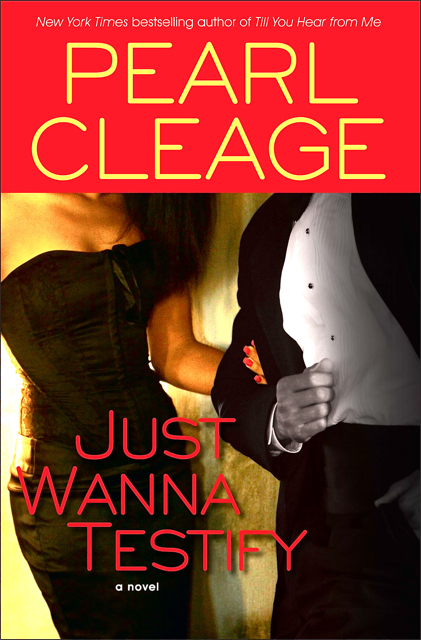
Pearl's latest book is  Just Wanna Testify.

Carleen Brice: You started out writing plays, correct? What led you to the theater?

Pearl Cleage: i have always loved the theatre. my mother and my father used to take us when i was growing up in detroit. we saw everything, from ossie davis and ruby dee in "purlie victorious" to dame judith anderson in "agamemnon" to rudolph nureyev with the royal ballet to jose greco and his passionate flamenco dancers to an updated version of shakespeare's "taming of the shrew" where they drove real motorcycles on the stage to alvin ailey's "revelations." i loved it all! i loved the movies, too, but the immediacy of live theatre was always so exciting. anything could happen! so i started writing short plays when i was really little.

i was one of those kids who always put together a chrsitmas play or a thanksgiving play that everybody had to watch after they've eaten that huge holiday meal and they are powerless to move. i'd recruit my cousins and my big sister and we'd do the christmas story or the pilgrims landing at plymouth rock. i doubt that we were very good, but we always got an enthusiastic response from our captive audience, and i was hooked! i acted and wrote plays all through school, but when i got to college, i stopped acting and concentrated on writing. i have written thirteen plays and i'm really happy to say they have all been professionally produced.

"since i had never written a novel, i was intimidated by the form. i didn't know where to start, how to proceed, how to wrap things up. as a playwright, i had been working to develop my craft for years. now here i was, facing something totally new. i took a deep breath, and calling on the spirits of alice walker and toni morrison to help me, i plunged in. this, of course, was a mistake."


CB: How is writing a novel different than writing a play? Do you have a different process?

PC: i never intended to write novels! i had been happily writing my plays and then i had an idea for a story that would not fit on the stage. it was too long, there were too many characters, too many settings, too much internal dialogue. so after weeks of trying to change it enough to make it fit the stage, i gave up and decided i'd try to write it as a novel instead. since i had never written a novel, i was intimidated by the form. i didn't know where to start, how to proceed, how to wrap things up. as a playwright, i had been working to develop my craft for years. now here i was, facing something totally new. i took a deep breath, and calling on the spirits of alice walker and toni morrison to help me, i plunged in.

this, of course, was a mistake. anytime you try to conjure up great writers to work on your book with you, there is bound to be some confusion. for me, it was trying to write third person like they do. i was used to writing dialogue, not description. when you write a play, you say: "it is a sunday afternoon on the sidewalk outside of a harlem brownstone. the year is 1930." then the set designer does the research and creates a set that looks like that harlem sidewalk. the costumer designer creates authentic period costumes, the lighting designer makes it look like a sunny city afternoon, and the actors bring their charisma and skill to making the characters come alive. now, as a novelist, i had to do all that myself, in addition to creating characters and making them walk, talk and move through their story.

i was overwhelmed and after a few months, i was floundering around with two hundred pages that i hated. i was trying so hard to be a serious novelist that i wasn't having any fun and reading my pages, i knew the reader wouldn't have any fun either. so i took a bold step. i said a mental apology to alice and toni, threw away all those pages and started again, but this time i was writing first person. it worked like a charm. as a playwright, i'm used to letting the characters speak. once i started writing in the main character's voice, the book came alive. ava johnson had a story to tell and all i had to do was get out of the way and let her tell it. i had a ball. the book turned out to be what looks like crazy on an ordinary day, and i've been writing novels ever since.

"the women in my books work with young people, support refugees, help new mothers, employ the homeless, grow peace gardens and participate in anti-war demonstrations. they also find time to fall in love, have babies, raise families, go to the beach, fly kites and laugh with their friends. i never thought you had to give up romance to be a revolutionary!"

CB: Are you still writing plays? What about screenplays for any of your books?

PC: i still write plays. i just wrote one last year called "a song for coretta." it takes place in atlanta as five women wait in line to go and pay their respects to mrs. coretta king who lay in state at ebeneezer baptist church. when i saw the television coverage, i was very moved by the picture of all those folks, standing in the rain at midnight, waiting to say good by to someone they admired and respected so much. the play was done at spelman college, where i was teaching at the time, and then at seven stages theatre. we had a great cast and a wonderful director in crystal dickinson. we sold out every show! the play is currently going into production in several other cities. "a song for coretta" was the first play i had written in ten years and it felt good to be working in theatre again. i am thinking about another play already!

as far as screenplays are concerned, my husband, zaron burnett, who is also a writer, is working with me on screenplays of several of my books. i am curious to see how they will translate. people are always casting the movies for me, especially blue hamilton! of course, denzel washington in blue contacts is always the first one they mention!

CB: Your books always include messages about social justice and just being good to one another. Is that a conscious plan on your part when you start writing?

PC: i am a true child of the sixties so i'm always trying to make the world a better place! i am convinced that if every person would just do their part, we could solve any problems we have, worldwide! i grew up in a very politically conscious and politically active family and i'm sure that's part of why the people in my books are always so deeply rooted in their community. the southwest atlanta neighborhood i'm writing about has been my home for thirty years so i am acutely aware of our problems, but i am also aware of what a vibrant place it is. i hope the books encourage people to look around at their own communities and get involved in something to make it better. the women in my books work with young people, support refugees, help new mothers, employ the homeless, grow peace gardens and participate in anti-war demonstrations. they also find time to fall in love, have babies, raise families, go to the beach, fly kites and laugh with their friends. i never thought you had to give up romance to be a revolutionary!

CB: It’s been a while since I’ve been to Atlanta. Is the West End you describe in your latest books really the way you describe it: well-kept with all-night businesses and men who tips their hats to ladies and women who feel safe walking at night? Or is this an urban African American neighborhood as you’d like to see it?

PC: i wish i could say that west end is exactly as i describe it, but we're not there yet. one of the things i'm always trying to do in my books is to create the kind of neighborhood i want to live in. i want to be able to walk at midnight, fearlessly. i want to be able to sit on my front porch and not hear gun fire and i sure want to have some men around who tip their hats and know how to say "good morning!" i want to eat fresh vegetables from the bounty of community gardens, so, i try to paint those pictures. i try to make readers remember how it feels to be safe and happy and loved and free. if we can see it, we can be it! (i told you i was a sixties child!)


 "nobody's going to give you permission to write. they're always going to have other things for you to do. if you want to write, you better start writing."

CB: A lot of writers (published and not-yet-published) read the blog. What’s the best advice anyone ever gave you about writing?

PC: my father gave me some wonderful advice when i was working full time and raising my daughter and keeping up an active social life. i was spending my time doing everything but writing and, of course, i was whining about it. my father listened to me for about fifteen minutes and then he said, "nobody's going to give you permission to write. they're always going to have other things for you to do. if you want to write, you better start writing." my feelings were hurt because i was looking for some sympathy, but he was right. nobody is going to give anybody permission to write. if you want to do it, it is up to you to make a way to do it. the best book about the writing process that i've come across is anne lamott's bird by bird. it's widely available in paperback and it's got lots of good advice and laugh out loud stories about the craziness that all writers think is theirs alone, but which is really just part of the process.

CB: What changes have you noticed in publishing since your first novel, What Looks Like Crazy on an Ordinary Day, which was an Oprah Book Club pick?

PC: i think the biggest difference i've noticed in publishing is that there is a lot more emphasis on business and a lot less emphasis on the artistic development of the authors. publishers are struggling to find a way to make books commercially viable in an age when people are getting so much of their information from electronic sources. i think writers feel this pressure, too, and sometimes it gets in the way. the craft of writing doesn't have anything to do with the business of best sellers. when the two get confused, nothing good can come of it.


Thanks Pearl for your time!

Wednesday, November 9, 2011

Don't Blame Me, Blame HGTV! Or, How I Spent My Summer Vacation

 by Sheila Curran
        
I took this photo two years ago.  The background is our 'garden' in Tallahassee, where, as the saying goes, "Most places, you plant a garden, you water it and hope for the best.  In Tallahassee, you plant a garden, then beat it back with a stick."


       Clearly, the drought of 2006 didn't get the memo.  We lost our grass and gained huge roots that could not be beat back with any kind of stick I'd ever heard of.

       As mostly an inside person, I could have let the situation go, but my husband had other ideas.  Somehow, he talked me into some small landscape changes.  He has a way of making things sound easy.  He'd worked for a landscaping company in college, and afterwards, spent several years as a union bricklayer.  He knew how these things went.

The job started in mid-May and ended a week ago. In case you're counting, that's five months of work for our 'small project.' We subcontracted out the new sod but still, improving our curb appeal was an exhausting endeavor.  Every night after work, and all day on weekends, we dug and lifted and carried and sweated and generally threw ourselves into the labor of renovating our great outdoors.  I found myself repeating "The people who do this for a living deserve to get paid a lot more than they do!"

Nevertheless, there was something about physical labor that was satisfying.  The results were slow, but they were visible, unlike the less tangible rewards of writing, or trying to write.  Day by day, week by week, we installed a patio made of pavers (much, much much harder than it seemed when I idly suggested it to John).  I can't say he didn't warn me but I just couldn't believe it was that hard.  Dig a hole, fill it with some sand and add long brick-like stones in patterns.  How hard could it be?  I found the answer to that question: somewhere between three and four weeks of killing ourselves in the hottest summer on record.


This was our undistinguished and overgrown front entrance before the mammoth project.  We transplanted the huge sego palm and set out to lay, stone by stone, our own little slice of courtyard.


We finished the front yard in early July, then welcomed our son home for a weekend to help us build a deck on the side of the house.  Our teenage daughter helped as well.  We worked two twelve hour days in 100 degree heat.  Just as we finished, it started to rain and I took a photo of the newly installed wooden wonder.


I know.  It's hard to believe four people worked so hard and this is all we got.  Still, it was a huge achievement, and instead of the $3500 we'd been quoted, it only cost $1000 in materials and another 1000 litres of sweat.  I had this notion that we'd paint it and be done!  Yay!

Clearly, I'd forgotten the conversation in which my husband and I discussed his dream of building an outdoor fireplace.  And maybe a grill.  Shoot, he surely wasn't serious?  It was already the end of June and we'd killed ourselves.  Could we not make do? 

We made something. Peace I guess. Still, in the end, a huge truck showed up in our driveway and unloaded a pallet of brick the size of a car, and another one that consisted entirely of mortar.  Which I, as the unskilled worker on the project, would mix.  Mortar, or mud as masons refer to it, is mixed by lifting eighty pound bags into a wheelbarrow and watering and stirring until it gets to the consistency of something between cornbread and cookie dough.  Except you use a shovel to stir it and each 'spoonful' weighs fifteen pounds.  Might be harder than digging up clay to create a bed for the patio and then hand carrying sand and paver stones to fill it.  I think I mixed about a hundred bags of cement and each one was its own mini-boot-camp of strained shoulders and pulled triceps.  Not that I'm complaining.  Except, of course, that is exactly what I'm doing.

Here is a photo my daughter took halfway through the process.  My husband and I are dressed for success, looking particularly glamorous, I must say.

 By this time, I was DONE.  Toast.  Nevertheless, the chimney was not.  John and I worked side-by-side, quiet for the most part, and afterwards got to jump in the pool and talk about how hard we'd worked.  (This so you don't feel too sorry for us.)  I hesitate to use the word fun, but there was a certain element of pleasure in working together to create something physical and visual, to use our bodies, not our brains, in our efforts.  In our day jobs we toiled away on our book projects and after 'work' we did menial labor 'til the intellectual tasks we'd tackled sorted themselves out in our brains.  I was trying to complete my novel, the one I've been working on since 2008. Several plot twists actually came to me as I lugged another bag of concrete over to the wheelbarrow and went through the motions that had by then become rote.

In the end, we have finally finished.  What follows are pictures we took a week ago.  Already leaves have fallen on the patio and the deck too.  I need to water the flowers and the yard will soon need mowing.  But for now, we will pretend, just for a moment, that what we accomplished will stay that way without a lifted finger, except the kind you might use to point at something with pride, saying, "Man that was some kind of small landscaping job!"  In the meantime, I also finished a first draft of OUR LADY OF THE SNOWS and am grateful for the kinesthetic breakthroughs that came to me in the midst of mixing mud.  I'm now in the midst of weeding out repetition and beating back prosaic confusion with a stick, hoping that in the end, the novel gets to the point where it, too, is photo-ready and a joy to behold.

 And if you go around the corner, you can see the pool area.


And if you stood behind the fountain and looked at the house with the new side deck, it would look like this.

And if you walked towards the house and towards the grill and fireplace, it would look something like this.

Perhaps if it stays looking this nice, I'll host a gathering of the Girlfriends to come sit outside and tell me how it's kind of okay to go wildly off topic of "genre and scary Halloween things" to yammer on about my not-very-secret garden with far more drama than it deserves. 

In the meantime, let me tell you, whatever you pay the contractor to come in and make things beautiful, it's worth that and a whole lot more.

 Sheila Curran's novels, EVERYONE SHE LOVED and DIANA LIVELY IS FALLING DOWN are available in bookstores, online and as E-books.


Monday, November 7, 2011

Five Scary-Gothic Things About Being a Writer

By Cindy Jones
"Don't be afraid," Mrs. Danvers says, "I won't push you."
My debut novel was published seven months ago and since then, certain aspects of my writing life have begun to imitate Gothic fiction, a genre that combines horror and Romantic themes for a pleasing sort of terror.  Romantic themes include things like mystery, psychological terror, medieval architecture, death, madness, and secrets.  I do not write Gothic fiction but I cut my teeth reading Nancy Drew, followed by The Secret Garden, to Wuthering Heights by 7th grade.  I knew I’d found my niche when Heathcliff groaned in a paroxysm of ungovernable passion after learning of Catherine’s death: 
"I know that ghosts have wandered the earth.  Be with me always--take any form--drive me mad!  Only do not leave me in this abyss, where I cannot find you!
The notion that my writing life generates Gothic associations comes as no surprise—I must have spent a previous life as a fly on Emily Bronte’s wall—a simple walk to my car in the parking lot is fraught with Gothic imaginings.  Here are five examples of Gothic elements in my daily writing life:   
  1. The Person with No Name.  Book signings trigger a precipitous descent into madness.  I’m seated at a table with a pen in my hand and my best friend since kindergarten approaches me with a book to be personalized.  We drove to the event in the same car, yet I cannot recall this person’s name.  What madness this is!  My mind races, seeking a clue to unlock the secret. Who are you?  I ask the person to spell it for me.  P-A-T.  Thanks.  Next.  
  2. Ghosts of Books Past.  A Gothic horror moment occurs when I am speaking about my only published book, standing at a podium before a room full of people, my mouth open, waiting for the explanation of the protagonist’s motivation, when I realize the characters, theme, and plot from my previous novel have vanished into another realm, a dark mysterious corner of my mind I cannot visit, the crypt-like other world where everything goes to get out of my way while I clear the deck to work.  I have completely forgotten that book.  Ask me about my new book. 
  3. Reviews by Gothic Villains.  One-star reviews seem suspiciously alike.  They all use the same words and spring from a cesspool of  envy and resentment common to imprisoned madwomen of Victorian attics.  Theirs is a form of literary criticism not found in more balanced analysis and I’m fairly certain I know who writes all the one-star reviews.  Someone needs to stop Rochester’s mad wife from posting flaming criticism online.  
  4. Google Alert Horror.  Google Alerts slip into my inbox, hiding silently among the names of my colleagues to surprise me without notice.  A Google Alert may be a notice of my own blog posted the previous day or it could be a flaming one-star review (see above).  I won’t know unless I look.  If only I had the discipline of fellow authors who ignore potential disruptions like this.  But, like the beating heart under Poe’s wooden floor, if I ignore it, the pulse will merge with my own, taunting me, until I break down and click on the subject line.  
  5. Death by Self Doubt.  Sometimes I can be completely alone in a room 450 miles from home, engaging in friction-free writing, and I will hear a little voice in my head that sounds like Mrs. Danvers in Rebecca.  She starts with a critical remark about a particular passage and swiftly moves on to disparage entire pages of my manuscript.  “Why don’t you quit writing?” she says.  “You know it’s no good.”  She pushes me away from the keyboard.  Fog fills the open window, damp and clammy, it stings my eyes, it cling to my nostrils. “Don’t be afraid,” she says.  “I won’t push you.  Go of your own accord.”  I hold onto the window sill with my hands until my better self tells me to quit fooling around and get back to work.        

I write women's fiction that I love to spice with faint Gothic echoes.  If you like this sort of thing, you might enjoy reading My Jane Austen Summer.

Follow Cindy Jones:

What's in a genre? by Jacqueline Luckett


I have a friend who’s an avid reader. “I don’t care if it’s a real book or on my Kindle,” she tells me during one of our regular Sunday morning chats. “I don’t care if the characters are black, white or purple. I don’t care where the story takes place. I just want to be able to curl up and get lost in a good story.” She’s a writer’s dream reader, don’t you think? She gives equal opportunity to all books.

As a young girl, I spent as much time as I could in the library. I never worried about genre. I wanted escape. I chose my books by the cover, the story summary, by author, by first paragraphs and friends’ recommendations. It was a failsafe system back then, and though my selection process has become more sophisticated, the old system is still the basis for finding a good book. And that’s why, with some exceptions, genre labels don’t work for me. I’m like my good buddy: I just want a good story. And depending on my mood, it doesn’t matter what genre that story falls into.

Like most writers, I have lots of books. They bulge from shelves and the tops of cabinets. They’re piled on my coffee table, my nightstand and my dresser.  They fall into the categories of poetry, fiction and non-fiction. After that, I refuse to put them into specific genres. It’s too hard.

So, I set out to learn more about genre, these categorizations tossed about by authors and publishers that often guide what we will and won't read (or buy). Wikipedia defines genre fiction as “a term for fictional works written with the intent of fitting into a specific literary genre in order to appeal to readers and fans already familiar with that genre.” Interesting, but confining. WikiAnswers lists over fifteen categories that include poetry, short story, drama, adventure and tragedy. Confusing. That one seems a bit more inclusive than another site that lists seven popular genres. Selective?

I balk at these classifications because they’re so general and yet limiting. Oh, they work if I'm in the mood for a mystery or thriller, but otherwise I don't consider genre. Categorizing makes it easy for bookstores and libraries to shelve books into sections. Yes, genres help readers figure out where to find the books they like (sometimes): science fiction, mystery, crime fiction, romance, and so on. But these classifications raise questions for me. Not every book is clear cut. I found other categories: African American, Asian American, autobiographical fiction. Whew! If an African American or an Asian American author writes a horror novel with characters with their backgrounds (or not), where do those books go on the bookstore shelves? How are they classified? By author’s race or story content? (Warning: this may be a trick question!) Or what if an author, not a person of color, writes, say a mystery or romance, about a racial group—how is that book classified? Or is that confusing genre with something else?

Am I being too picky? Do I not understand genre? Sure I do. I simply refuse to be governed by it. I have books that are both cookbook and memoir—what’s genre is that? I love Toni Morrison, ZZ Packer, Alice Munro, Walter Mosley, Tayari Jones, Julie Otsuka—are they genre fiction or literature? I dont care. They're wonderful, complex writers.

If I sound frustrated, I am. 

I try to avoid labels or being put into a box in my everyday life, and I don’t like being boxed into genres for what I read or write. Like my friend, I just like good books—well-written books that capture and hold my attention, challenge my imagination, and leave me wanting more. That’s what I hope I’ve written and that’s what I like to read.

How do you select the books you read?


In 1999, Jacqueline Luckett took a creative writing class on a dare, from herself, and began writing short stories and poetry and never looked back. Searching for Tina Turner (Grand Central Publishing) is available at bookstores and online.  Passing Love, releases in January, 2012. 
www.facebook.com/Author.JacquelineLuckett Twitter: @jackieluckett http://twitter.com/jackieluckett

Thursday, November 3, 2011

Fresh Eyes: The Importance of Critique Groups by Wendy Nelson Tokunaga


With the mega-popularity of self-published e-books and National Novel Writing Month (NaNoWriMo) in full swing, it seems that everyone I run into is in the throes of working on a novel. But it’s the rare writer who can come up with a winning read by writing in a vacuum. It’s always important to get feedback on your writing to make your work the best it can be. But how do you go about it?

One of the best ways to grow as a writer is to join a critique group of fellow writers who meet in person (or perhaps online) to give constructive feedback on each other’s work. While I prefer a group so I can get a variety of opinions, some writers rely on a sole critique partner to give them the input they need to get through the next round of revisions. No matter how good a writer you are, having a pair of fresh eyes to look at your prose is almost always helpful at spotting weaknesses in plot, characterization, hackneyed phrases, boring passages, plausibility and just about anything else. When you’re so enmeshed in your own work, these flaws can be hard to recognize, but can jump off the page to an astute writer/reader.

And a critique group can be a great source when you want to brainstorm new ideas, bask in supportive reassurance that you’re on the right track, or get a whole new outlook on a novel that seems dead in the water to you, but actually might still have some life in it. And another benefit that a critique group offers is deadlines. I find it an excellent motivator to produce new material when I know my critique group is expecting twenty pages by a particular date.

Obviously you need to find the right fit and the right balance of nurturance, support and honest-but-helpful criticism. This can take time and some trial and error. An incompatible critique group member can upset the whole delicate balance so those who are selecting a new member and those who are “auditioning” both need to be careful.

Although critique groups can be extremely beneficial to the writing process, there’s also the danger of outgrowing your group. Your writing may ascend to the next level and the caliber of feedback just might not be so helpful anymore. Critique groups can also become incestuous, where members get to know each other so well that they no longer can be objective about the work. When such obstacles arise, even though it might be painful, it just could be time to bid farewell and seek out another group.

And where can you find a group, whether you’re a newbie or a seasoned veteran? Try networking with fellow writers at writers’ conferences, both in-person and online, and connecting via social media sites. Or join a local writer’s networking group and put out the word. There’s also a new website you might want to check out called Ladies Who Critique that puts like-minded writers in touch with each other. And for lots of great tips on critique groups, there’s Becky Levine’s book, The Writing and Critique Group Survival Guide.

I know I’ve learned a lot from my critique groups and crit partners and I learn even more about my own writing by returning the favor and giving critiques to others. How have critique groups helped (or hindered) you as a writer?

Wendy Nelson Tokunaga is the author of the novels “Midori by Moonlight” and “Love in Translation,” both published by St. Martin’s Press. She is also the author of the non-fiction e-book, “Marriage in Translation: Foreign Wife, Japanese Husband.” Forthcoming for her in Spring 2012 is an essay in the anthology “Madonna and Me” from Soft Skull Press, and a short story in the Young Adult “Tomo” anthology of Japan-related fiction to be published by Stone Bridge Press. She teaches writing at Stanford University’s Online Writer’s Studio and University of San Francisco, and also has her own manuscript consulting service. Visit her at: www.WendyTokunaga.com

My First Attempt At Indie Publishing!


I wrote four books for Dorchester in the Bombay Greatest Hits series.  When I got my rights back, I published my backlist.  Then, two years later, I finally sucked it up (and caved in to angry fans) and wrote the fifth story in the series, putting it up myself.

PARADISE is a novella.  According to my sister, this means it's in Spanish.  I had to explain to her that no, this was just a shorter novel.  She asked why that wouldn't be a novellette. 

After writing 300 page books, a 150 page book should be easier to write, right?  Wrong!  It was much, much harder.  I was used to the luxury of 300 pages to spread the story out.  Pacing is everything.  But in half of that space, I still had to have a compelling mystery (which I really hope I had), show growth in the character and give a realistic story arc.

And my characters were having none of that.  The Bastards.

It took longer than a novel to write.  I wonder how much of that is in my head.  It was an intimidating task.  I'm not sure I would do it again.  But so far (10 days) the fans seem to like it.  So maybe I won't give up on that idea just yet.

I do love the freedom associated with indie publishing.  I'm thinking of doing a collection of short stories - all featuring various Bombays through history.  Of course, I might be biting off more than I can chew. 

I'll let you know how it goes.

Leslie Langtry